



3D Accident Recreation – Incident Analysis
Project Objectives
The aim of this 3D reconstruction was to recreate the accident with precision and objectivity, allowing investigators and training facilitators to gain a deeper understanding of how and why the incident occurred.
Key objectives included:
- Accurate Representation: Recreate the physical environment, personnel, and machinery involved in the incident based on available reports, site images, and technical data.
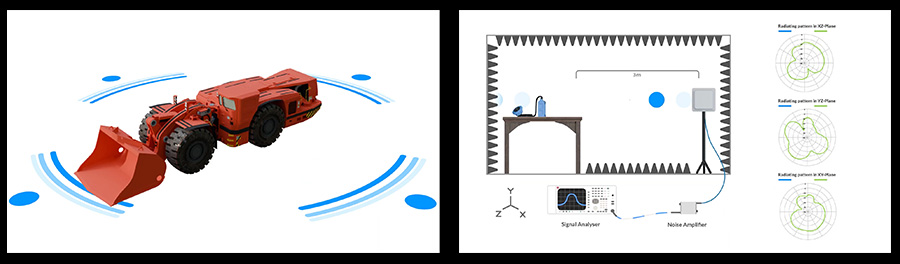
- Clear Visual Narrative: Use 3D animation to show the sequence of events in a clear, step-by-step manner, and show how the Proximity Detection System (PDS) failed and how it should have worked.
- Educational Purpose: Provide a visual tool for safety training and root-cause analysis to prevent similar incidents.
- Neutral Storytelling: Avoid blame or dramatisation, maintaining an impartial, evidence-based presentation style.
- Visual Focus: Replace traditional narration with on-screen text and background music to ensure focus remains on the event sequence and spatial dynamics.
 Creative Process
Research and Reconstruction
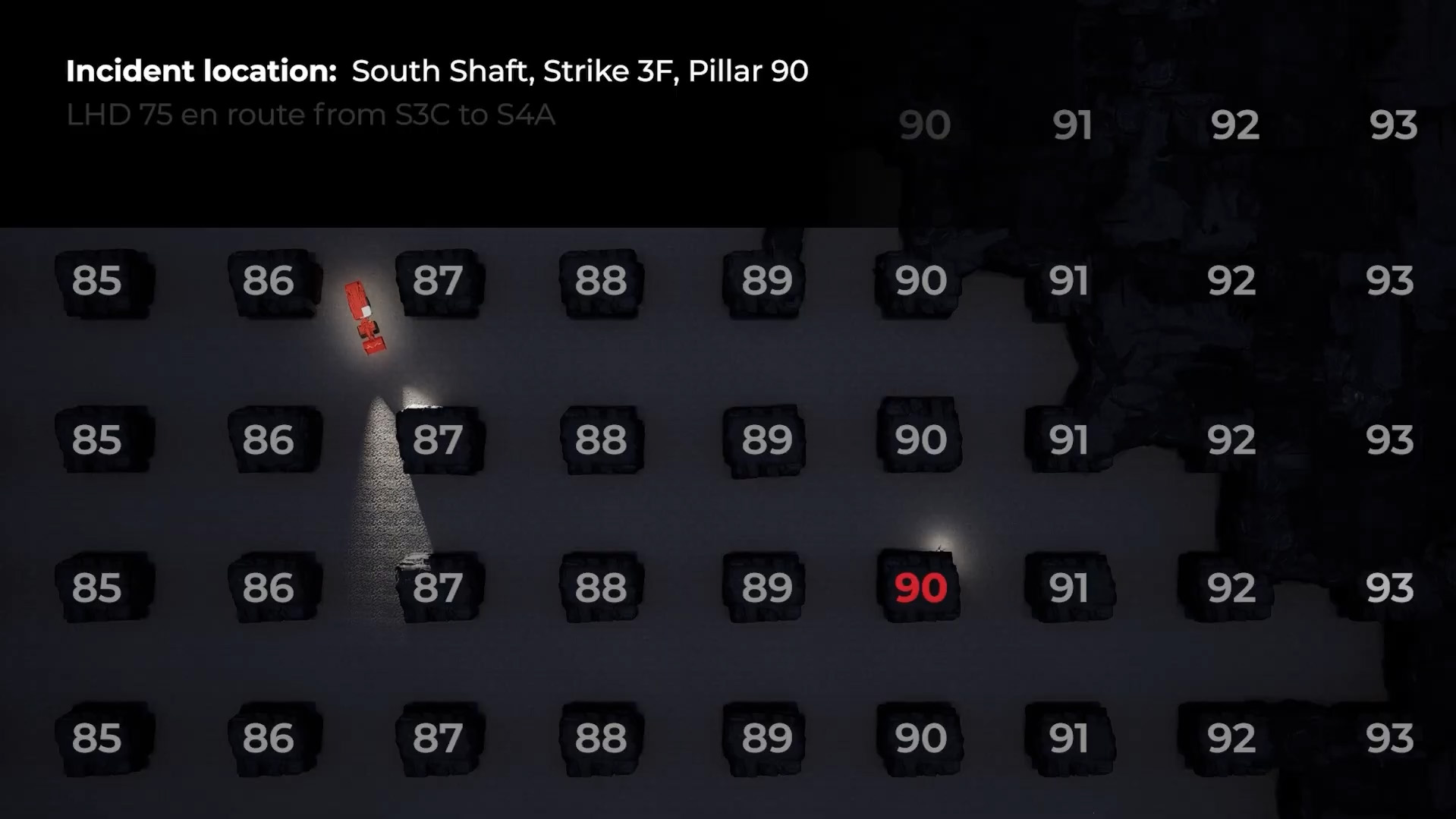
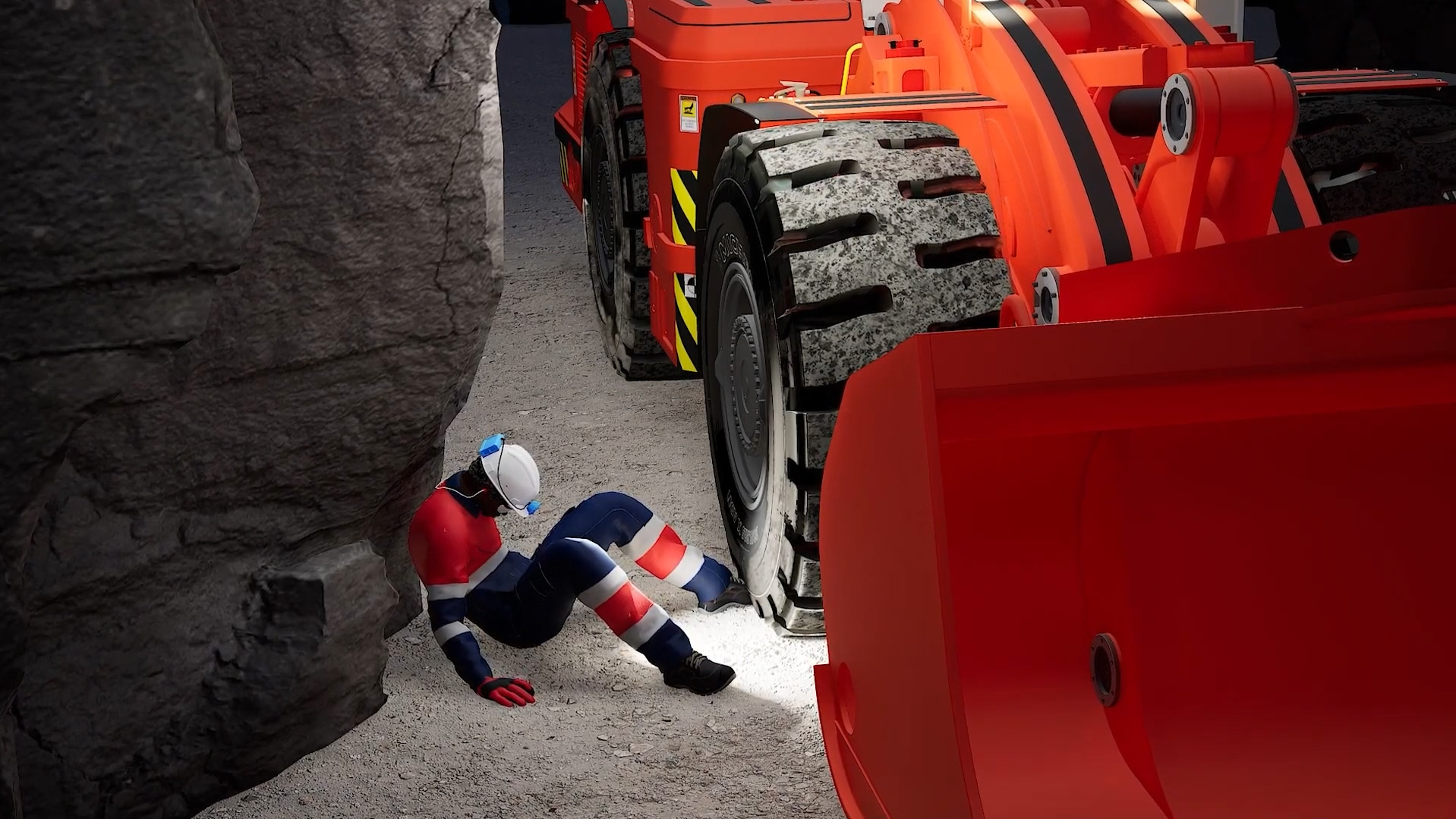
Our team began by analysing the incident reports, site layouts, and equipment specifications provided. Every aspect of the environment, including machinery scale, movement paths,signal system, and the worker’s seated position, was carefully modelled in 3D.
We used this data to reconstruct the timeline of the incident, ensuring that each movement and point of impact accurately reflected the recorded findings. We also went into detail on how the PDS have failed to detect the person and how the system works. The recreation was then reviewed internally for both technical accuracy and visual clarity.
Design and Animation
The animation employed a realistic visual style, focusing on mechanical accuracy and spatial awareness rather than stylised effects.
Key visual elements included:
- Detailed 3D models of the machinery and workstation.
- Correct proportional representation of distances, angles, and motion paths.
- Slow-motion sequences to highlight the moment of contact and contributing factors.
- On-screen labels and callouts identifying key actions, zones, and safety oversights.
- How the PDS works to create a signal.
Lighting, camera movement, and pacing were all designed to create a clear and objective depiction.
Sound Design and Text Integration
To maintain professionalism and focus, the video featured no voice-over narration. Instead, it utilised short, descriptive text overlays to explain each stage of the event and key safety insights.
A subtle, low-tempo background track was selected to maintain a neutral yet serious tone, reinforcing the educational purpose of the video without dramatizing the content.
Execution
The animation was structured into three key phases:
- Pre-incident Overview: Showing the workplace layout, operator positioning, and machinery path.
- Incident Sequence: Reconstructing the exact moment of impact using slow-motion and highlighted visual cues.
- Post-incident Analysis: Annotating contributing factors and key lessons to support future safety training.
Transitions were deliberately smooth and minimal to maintain an investigative tone and keep attention on the mechanical interactions that led to the accident.
Results
The completed 3D accident recreation provided a powerful visual tool for understanding the sequence and causation of the incident.
It allowed investigators, management, and training teams to analyse spatial relationships and timing in a way that written reports alone could not convey.
Key outcomes included:
- Enhanced Investigation Clarity: Enabled teams to visualise and discuss the exact chain of events.
- Training Impact: Provided a realistic safety demonstration for future prevention programs.
- Improved Understanding: Helped identify procedural gaps and reinforce safe operational practices.
- Neutral Communication: Delivered factual insight without bias or emotional dramatisation.
Conclusion
This project demonstrates how 3D accident recreation can transform traditional safety reporting into an immersive investigative and educational tool. By combining accurate 3D modelling, measured animation, and clear visual communication, the recreation provided invaluable support for both incident analysis and safety awareness training.
Through this process, we reaffirmed the importance of visual learning in safety culture, helping teams see not only what went wrong, but how to prevent it in the future.
We are a leading video production company in Johannesburg and have one of the top learner management systems in South Africa.
We specialise in Video Production, Photography, Graphic Design, eLearning Development, Web Design, Animation and Creative Consultation. | info@oliverkarstel.co.za | www.oliverkarstel.co.za | IG.com/oliverkarstel
Info
3D Accident Recreation
Incident Analysis
Animation
24/11/2025

No Comments